THE ENTRAINED SPATIAL MEDIUM GRAVITATIONAL SINK MODEL:
BIG BANG - RAISIN BREAD THEORY AND PHOTON ABSORPTION
SUGGEST MECHANISMS UNDERLYING GENERAL RELATIVITY:

By Henry C. Warren Jr.


E-Mail hcwarren@olypen.com

Regular Mail : 928 Benjamin St. Port Angeles, Washington 98362
Tel. : (360) 457-7610


 | [THE MODEL]  | [SPECULATION] |  [BACKGROUND]                      VIEW MURDER MYSTERY BY AUTHOR

[Download Printer Friendly Version - Acrobat .pdf Format]


PREFACE


The proposed theory goes so strongly against some of the conventional wisdom of modern physics that I am going to provide several pieces of information upon which the model draws or that are are at least consistent with it. The hope is that the reader will read the model and whether or not he or she agrees with the model, at least support doing a key test of it.


1. Mainstream quantum mechanics (QM) regards the photon as an alloy (34)of two quanta being roughly 80% Bº and 20% Wº.


2. The sphere of influence of photons shrink(34) as they are energized and their wavelengths  shrink.


3. Hidden symmetries; the living vacuum as evidenced by the Casimir effect, and background fields, such as the Higgs field(34), in which screening creates effective mass are all consistent with main stream QM. The effective mass is presumed not to be a property of particles, but of the interaction with the surrounding background.


4. Quantum mechanics accepts that the fine structure constant, the electric charge and the strong force vary depending on the strength(34) with which they are probed. The true value of the electrical charge, for example is assumed to be masked by the living vacuum.


5. The strength of the strong force is masked(34) by the fact that quarks, do not exist free in nature, but always come packaged in groups of two or more in nature. Just as an atom containing powerful electric charges appears to be electrically neutral, nucleons and their even stronger forces do likewise unless approached very closely by another nucleon.


6. Modern cosmology posits that the permittivity of the vacuum(18) varies with the expansion of the universe.


7. Both Newtonian physics and General Relativity (GM) have light obey gravity with GM having gravity bend light at twice the rate that Newtonian physics, as calculated by Soldner, was assumed to do. The Shapiro time(19) delay is an experimentally demonstrated impact of gravity upon light.


8. Recent work by qualified physicists have indicated that free quarks created the Relativistic Heavy Ion Collider in conditions believed to similar to those existing at the time of the big bang(36) behaved as a liquid.


9. Black hole(37)  modeling reveals that the propagation of sound in an uneven liquid flow is closely analogous to the propagation of light in curved spacetime and contrary to Einstein’s assumptions possess a preferred frame of reference that manifests itself on fine scales..


10. Bose- Einstein condensates(38) can t be regarded as a quantum fluids.


11.. Steven Weinberg proposed in his text Gravitation and Cosmology(21) that the Principle of Equivalence of Gravitation and Inertia provided a better bridge between gravity and particle physics than Einstein’s geometrical approach.


".....At one time it was even hoped that the rest of physics could be brought into a geometric formulation, but this hope has met with disappointment, and the geometric interpretation of the theory of gravity has dwindled to a mere analogy, which lingers in our language like 'metric', 'affine connection' and 'curvature', but is not otherwise very useful....."

12. Newton(13) posited in a 1675 letter to Oldenburg, the Secretary of the Royal Society, and later to Robert Boyle, that gravity was the result of a condensation causing a flow of an ether with a corresponding thinning of the ether density associated with the increased velocity of flow. He also asserted that such a process was consistent with all his other work and Kepler's Laws of Motion.

13. No matter how created, Newton, general relativity, and quantum mechanics regard gravitational fields as associated with and traveling with the massive bodies. The fields can be regarded as entrained.


14. The Michelson-Morley experiment was conducted on the surface of the earth, thus deep in the earth’s gravitational field where light was under the strong influence of the earth’s gravitational field. Thus it was incapable of measuring the drift of the earth through any background ether, because of the effects of the earth’s entrained gravitational field.

15. Robert Kirkwood(4) showed some fifty years ago that a flowing ether model yielded the Schwarzschild line element in Einstein's theory. Herbert Ives(6) had done the same thing several years earlier. More recently, Tom Martin(7) of the Gravity Research Institute, Boulder, Colorado has done so for a model based upon spatial flow of a physical substrate. It is generally accepted that any theory which produces the Schwarzschild line element will produce the same results as General Relativity for the key tests of General Relativity:

I show in the proposed model that if gravity is the result of a process similar to what Newton suggested, it would bend light by the same amount as general relativity proposes and that the velocity of light would vary with position in the gravitational field as Einstein(2) once proposed in his book Relativity (1916):


  "A curvature of rays of rays of light can only take place when the velocity of propagation of light varies with position." (Italics added.) Einstein goes on to note that the constant velocity of light is restricted to special relativity i.e. absent a gravitational field.


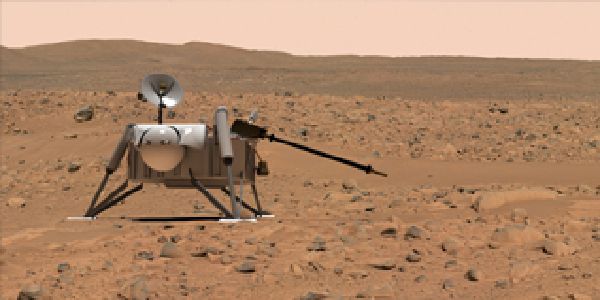
Einstein changed his mind, but I suspect that the reason was that the variation in velocity is masked by the underlying dynamics.  I believe that the most direct interpretation of the Shapiro time delay(19), as revealed by the Viking landers on Mars, already supports this premise. I propose another test that will be unambiguous.


 I propose that the velocity of light be measured twice once on the surface of the earth and once in orbit. For reasons of experimental control the ideal situation would use the same apparatus in the same spaceship on earth and in orbit. It is absolutely essential that the measurements be made tangentially to the surface of the earth and to the spaceship’s orbit. That is, the measurements must be made perpendicular to the radius of the gravitational field.


If the speed of light is truly constant then no change will be detected between the two sets of measurements and Einstein’s later thinking will be once again confirmed. That should be sufficient justification for the experiment. But if they are different a richer understanding of gravity will result, the horizon and flatness problems will be solved, and I suspect it will be easier to bridge GR and particle physics.

ABSTRACT

Given that light obeys gravity, the Michelson-Morley experiment which was conducted deep in the earth’s gravitational field, is shown to be an inherently invalid test of the earth's drift through an ether and to not be relevant to rod length considerations.


Gravity is posited to be the result of masses acting as sinks of a spatial fabric in which a condensation or an absorption of the spatial medium causes a depletion or thinning resulting in a gradient in the density of the spatial fabric near the mass. The gradient results in an inflow of the spatial medium with the velocity of inflow, being inversely proportional to the degree of thinning. A low pressure system serves as an analogy. Mass and energy are carried toward the gravitational body in a passive manner similar to the way continental drift transports continents. The field is vertically, but not rotationally, entrained, being a creation of the gravitational mass and traveling with it.


Inertia is posited to be the result of an accelerated body experiencing a portion of its own gravitational field. Rest mass is posited to be a measure of the strength of the gravitational field.


Light is deflected by two processes, the inflow of the spatial medium and refraction by the spatial medium gradient, even if the photon is treated as a particle. No dispersion occurs because the spatial medium is not atomic in nature and thus does not differentially absorb and re-radiate light of different wavelengths. The medium is essential for photon propagation and because of its perfect or near perfect elasticity does not cause photon to loose energy during propagation. The speed of light through the spatial medium varies inversely with position in a gravitational field and with the state of expansion of the universe.


The gravitational redshift is regarded as a special case of the velocity redshift. Clocks slow and rods lengthen, not shorten, in moving frames.


This theory predicts that if an apparatus capable of measuring the speed of light is used within a spaceship on the surface of the earth and then the same spaceship and apparatus are used in space – always oriented normal to the radius of the earth’s gravitational field and at the same radial distance from the surface of the earth - the speed of light will be faster in space than at the earth’s surface. The Viking Lander on Mars Shapiro time delay experiment came close to doing so, but did not accomplish this test.

INTRODUCTION

About This Document

The document presents five separate concepts: (1) A proposed model of gravity that tweaks general relativity by blending an idea of Newton’s with an early idea of Einstein’s; (2) A model of inertia which can readily be incorporated into both Newtonian gravity and general relativity, namely that inertia is the result of an accelerated entity experiencing a portion of its own field; (3) The assertion that because light obeys gravity the Michelson-Morley experiment was inherently incapable or only minimally of measuring the drift of the earth through an ether; (4) A proposition that the gravitational redshift is a special case of the velocity redshift; and (5) The proposition that rod lengths lengthen with high velocity and in gravitational fields. Each independently stands or falls on its own merit and the failure of any of these does not necessarily invalidate any other. An experiment is proposed to test proposition (1), which depending on how it is implemented could also test proposition (5).

Einstein and "space"

No one knows what space is, but general relativity warps it and has it steer mass and light. Big Bang Theory expands it. Raisin Bread Cosmology has it carry matter and energy along for the ride. The Dynamic Vacuum perturbs it. Some theorists loop it. Some, including this model, assume that matter and the propagation of light cannot exist outside it. All the foregoing, the concept of a Higgs field, and the existence of phenomena such as the Casimir effect and permittivity and permeability of the vacuum suggest that space - or the fabric thereof - is substantive. Further, Bell's Theorem and Alain Aspect's experiments, the Dynamic Vacuum, and the apparent insufficient presence of enough matter to account for galaxies not flying apart, suggest that there exists an underlying spatial reality to which we may be largely "electromagnetically" blind and where processes may exceed the speed of light under certain circumstances, such as in the vicinity of black holes.

The ether is considered passé today because of the Michelson- Morley experiment, but it will be shown from several perspectives in the sections Michelson-Morley and Special Relativity; Gravity and Inertia; Spatial Fabric Sinks and Relative Motion; and Inertial Mass that because light obeys gravity and the experiment occurred deep in an entrained gravitational field, it was an invalid test of drift through an ether and of rod lengths.

Einstein believed he had eliminated the need for ether with special relativity, but with general relativity he in effect substituted a “space with properties” for that ether. In a 1920 lecture(1), after his theory of general relativity was fully developed, Einstein acknowledged the necessity for ether. In his book, Relativity(2), also written after his theory was fully developed, he likewise asserted the need for a medium in which light could propagate. What general relativity did in effect was to rename ether and call it space. This model preferentially uses expressions such as fabric of space or medium in space, without spelling out precisely the nature of that fabric or medium.

Robert Kirkwood(3,4) showed some fifty years ago that a flowing ether model yielded the Schwarzschild line element in Einstein's theory. Herbert Ives(5,6) had done the same thing several years earlier. More recently, Tom Martin(7,8) of the Gravity Research Institute, Boulder, Colorado has done so for a model based upon spatial flow of a physical substrate. It is generally accepted that any theory which produces the Schwarzschild line element will produce the same results as general relativity(9) for the key tests of said theory, including: Perihelion advance; Time delay in radar soundings; Geodesic effect; The gravitational redshift; and Bending of light. So this model and any other model that is based on the inflow of a spatial medium or fabric, quantum foam or soup, substrate or ether, by whatever other name one chooses to use, can meet all the same experimental tests that led to the acceptance of general relativity (GR).

In addition to the foregoing and contrary to conventional wisdom, seventeen years before GR was developed, Paul Gerber calculated the correct advancement of the perihelion of Mercury(10). Paul Marmet’s(11) web site contains several other correct calculations. In addition Newtonian physics correctly predicts a gravitational redshift. So all the renowned predictions have been duplicated using classical physics, except the double bending of light and this model accomplishes that. 


THE MODEL

Streaming matter and absorption

It is hard not to be struck by diagrams of matter streaming toward neutron stars, "black holes" and the apparent "great attractor" and not to see a similarity between this streaming and continental drift. If the universe was generated by the expansion of all of observable "space" and energy from a big bang, with "space" carrying matter along for the ride as proposed in raisin bread cosmology, then the process ought to be reversible. Thus, any possible big crunch, any formation of black holes, and ordinary gravity cause the universe or portions of it to vary in density and volume, but does not change the overall matter/energy content of the universe.

The sponge analogy

In this discussion the largest mass in a system being examined, such as a sun, is treated as stationary and the surrounding masses, such as planets and specs of dust, are referred to as passive masses, though they may be moving. The terms body, mass, and sink may be used interchangeably with the understanding that masses are gravitational bodies that act as spatial sinks or sources of condensation in this model.

To visualize this gravitational sink process, imagine a powerful spherical sponge with an enormous ability to absorb water placed in a swimming pool. The sponge acts as a sink causing the surrounding water to flow toward the sponge. If a string were stretched out in a straight line it would soon become curved. (providing half the curvature predicted by GR).


Figure A: Inflowing spatial fabric (blue) contributes Newtonian component of curvature of light (yellow) as it travels near a mass.


The unidirectional (monopole) nature of gravity in this model is due to the absorption or condensation process causing the fabric of space to flow only towards gravitational bodies and not away from them. If Gravitational processes are seen as the converse of Big Bang processes, then perhaps in combination nature reveals a dipole character.

As the surrounding fabric of space streams toward the massive body, it carries all surrounding masses and energy inward as in Raisin Bread Cosmology (Two dimensional examples would be continental drift and a conveyer belt). Thus, in this model gravitational bodies are regarded as "spatial" sinks

It becomes obvious why gravity cannot be distinguished from acceleration in this model. Gravity in this model is due to the acceleration of the fabric of space. The truth is no form of acceleration can be distinguished from any other in Einstein’s thought experiment.It also reveals why no force is felt by a body in free fall: there is no relative motion between a free falling body and its surrounding background spatial fabric.

The pattern of inflowing spatial fabric associated with a mass comprises its gravitational field. Force field geometry causes the velocity of the spatial medium to increase as a mass is approached. Thus, the Inverse Square Law applies as a first approximation and the strength of the field at any point.

But a mass passing by, in addition to being carried along by the in-flowing stream, also acts like a sponge and absorbs the fabric of space, helping close the gap between the two masses as they both "reel in the rope of space in a tug of war," (or alternatively, responds to the lack of density between them) which accounts for the attraction between two masses being proportional to the product of the masses.


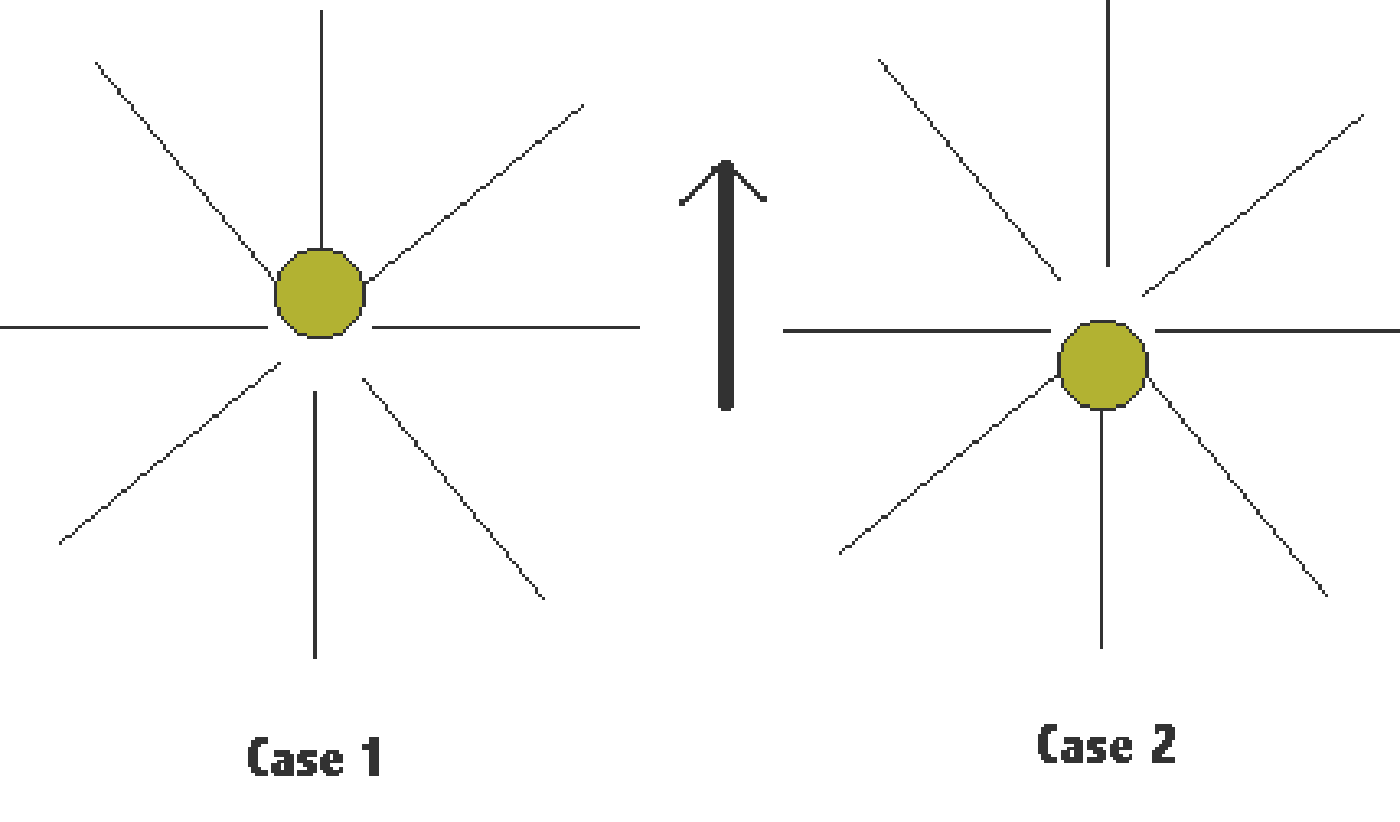
Figure B: Mass soaks up the fabric of space in all directions.
A "tug of war" is felt at Xs

But mass gobbles the fabric of space in all directions and the swallowing on the side away from the passive mass offsets the dynamics of that towards the stationary mass. The effect of this action is to allow the inertial mass to passively drift along with in-streaming conveyer belt of spatial fabric. Thus, the mass of the passive body can be disregarded when calculating its falling rate, which is why all bodies do fall at the same rate when "dropped" from the same point in a gravitational field. A cannon ball tugs harder on the earth than a feather does, but it also tugs harder on the rest of the universe than does a feather so in both cases the opposing effects cancel.

It was noted in the introduction that the math associated with this model produces the Schwarzschild solution. Thus most of the predictions of general relativity are also predicted by this theory, including time delay in Radar soundings, the deflection of light by a gravitational field, the gravitational redshift, the geodesic effect, and the advance of the perihelion of Mercury.

The Deflection of light

General relativity predicts that the deflection of light by a gravitational field is 4GM/R0c2.   Einstein stated in his book Relativity(2): "It may be added that according to the theory, half of this deflection is produced by the Newtonian field of attraction of the sun, and the other half by the geometrical modification ("curvature") of space caused by the sun."

He also observed in the same book:  "A curvature of rays of light can only take place when the velocity of propagation of light varies with position." (Italics added.) Einstein goes on to note that the constant velocity of light is restricted to special relativity i.e. absent a gravitational field.

Both of the above statements by Einstein were made after the completion of his theory.

Jim Ogle(12), in August, 2000, pointed out to the author that Newton had posited a model with ideas similar to those proposed in this model.  Newton(13) proposed in a 1675 letter to Oldenburg, the Secretary of the Royal Society, and later to Robert Boyle, that gravity was the result of a condensation causing a flow of ether with a corresponding thinning of the ether density associated with the increased velocity of flow. He also asserted that such a process was consistent with all his other work and Kepler's Laws of Motion. More recently Tom Van Flandern(26) has proposed that a varied speed of light can be associated with a density gradient.

The result is that light bends in a gravitational field twice as much as conventional wisdom holds would be done by Newtonian gravity.

An analysis of the deflection of light in view of Newton's and Einstein's thinking provides an opportunity to gain insight into the internal dynamics of gravitation.

Because the gravitational sink operates by causing a condensation or absorption of the surrounding spatial fabric or medium, two things happen.

First, a "density" gradient is established with the lowest pressure/density near the center of the system and the highest distally.

Second, in response to the density gradient, the medium streams towards the source of low pressure (water streams toward the sponge) with the highest velocities occurring near the sponge and the lowest velocities distally.

Since both processes are generated by the same sink, they are inversely related to each other with the highest velocities associated with the lowest "densities".


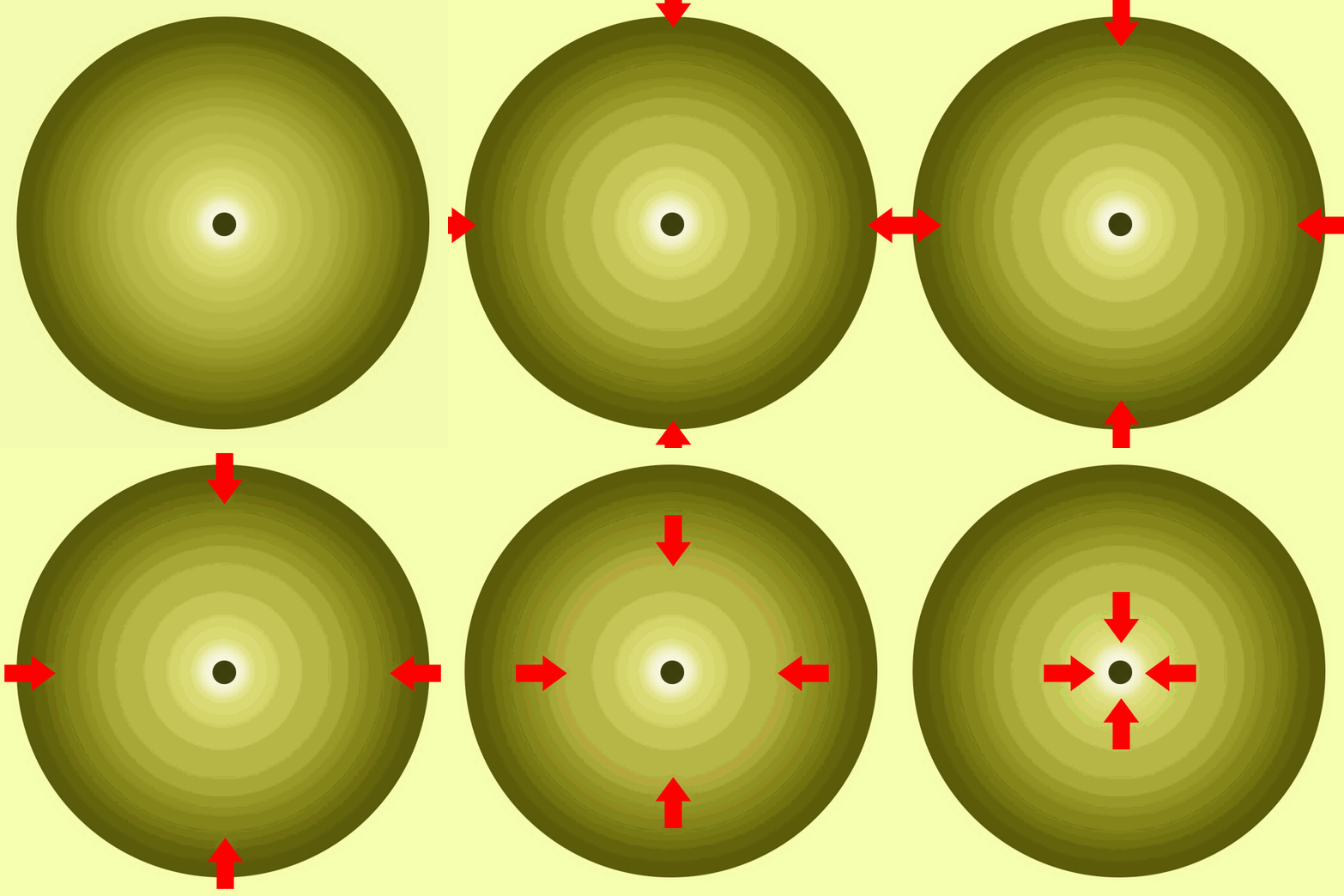
                                                   Figure C : Sink is red.
                                 Lighter colors represent lower density.
                                           Arrows represent flow
.

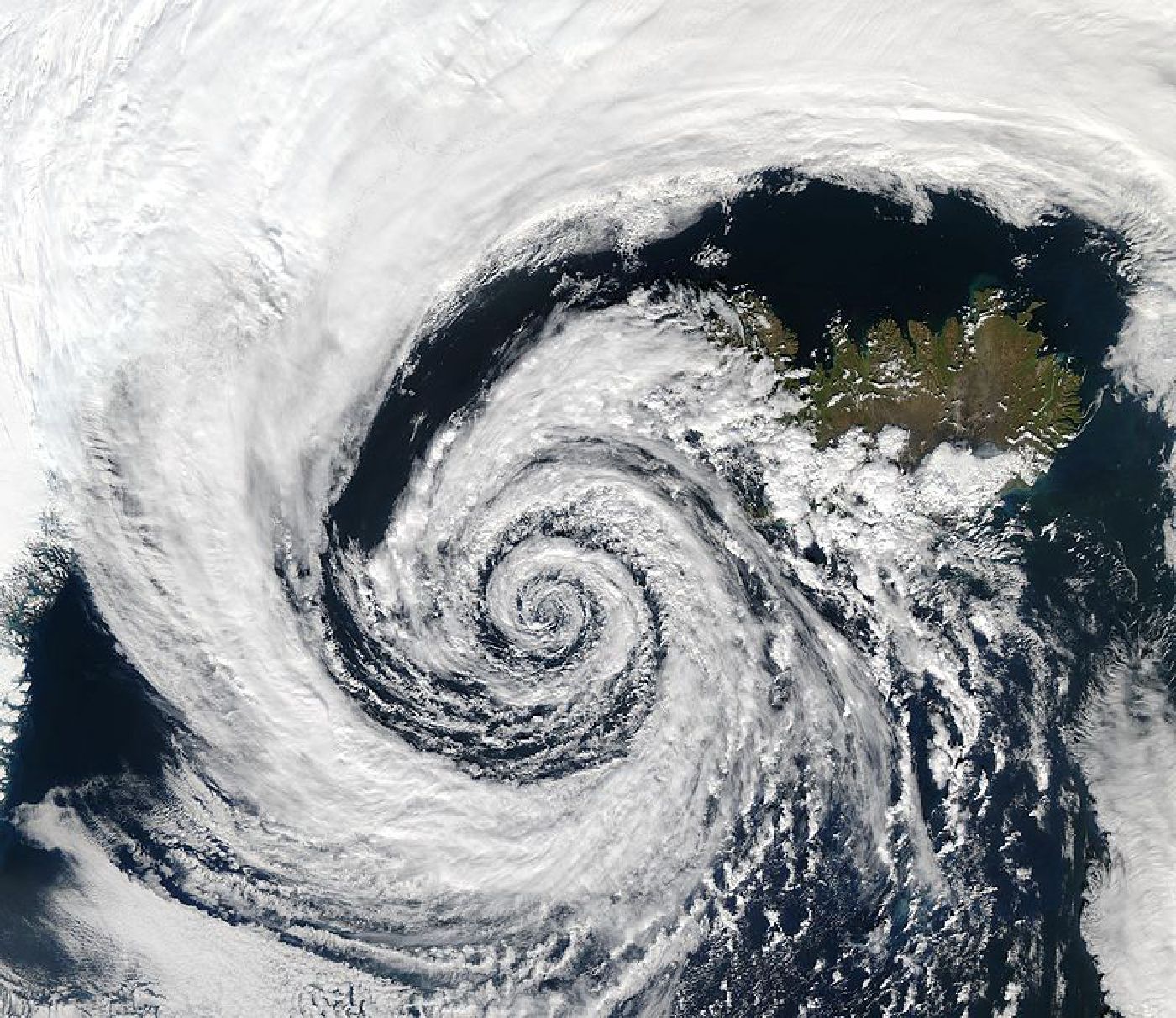
It may seem counter intuitive that the highest velocities occur where the pressure/density is lowest, but this is what happens in all of nature's sinks, such as cyclones or whirlpools. Note the cause and effect relationships. The sink causes the density gradient which in turn causes the increased flow of the spatial medium.

Light can be treated as having both particle and wavelike properties. Normally using either one or the other of these properties in calculations gives the right answer to most physics problems, because most processes tap into only one or the other of these properties. But the situation is different when considering the behavior of light in a gravitational field.

Then if one assumes that the photon travels as a wave and that the position of the wave in the inflowing spatial medium can be treated as a massless particle or planet, then both properties of photons contribute to the solution.

It may be that the apparent particle aspect of photons is an artifact of the way atoms absorb and emit quanta of energy and that the photon shares traits of the phonon, the sound particle, though the analogy may break down if pushed too far.


Richard Feynman argued in his book, QED, that photomultiplier experiments demonstrated that photons are particles. Then their emission from “spherical” atoms with magnetic moments and subsequent behavior can be statistically described relevant to the surface area of the atom with results that mimic wave behavior and he shows how refraction results. The diffraction patterns of electrons in slit experiments also show that particles can behave in a manner that can be interpreted as wavelike, mimicking Huygen’s principle behavior. 

 Further, a propagating photon particle would be expected to respond to variations in spatial medium density, curving in a manner that produces results which fit the analysis provided by Einstein below. This would be in addition to the “continental drift” effect of the inflowing spatial medium which comprises the gravitational field. Thus, treating both the particle and wavelike aspects of photons mathematically is justified with half of the bending of light by gravity attributed to each, even if photons are particles.

No detectable dispersion of light occurs in a vacuum or outer space and none occurs in the spatial medium. That is because the medium is not composed of atoms, so the behavior of light in the spatial medium does not correspond to the behavior of light in air. In air and material media atoms interact with light absorbing and re-emitting light differentially and scattering and dispersion occur.

Since in this spatial sink model the spatial medium is viewed as necessary for the propagation of light, the internal velocity of light through the spatial medium will be faster where the density of that medium is greatest and slower in less dense medium. The transmission of sound in a material medium provides an analogy for this aspect of the transmission of light i.e. sounds propagated faster in denser mediums. Thus, differential velocities associated with the differential densities can cause the bending of light without dispersion.

No matter how viewed the apparent fact that photons fail to lose energy as they travel great distances through the spatial medium is the result of the fact that in the Spatial Sink Model the spatial medium is: (1) necessary in order for photons to propagate; (2) non atomic and non electromagnetic in nature; and (3) is perfectly or nearly perfectly elastic. This is consistent with photon’s response to the curvature of space in GR, which is said to curve the path of photons while not diminishing the energy of same. If the apparent retardation of the velocity of the Pioneer probes by John Anderson holds(31) it could be reflective of some slight lack of elasticity on the part of the spatial medium applicable to both this model and GR.

The first half: The bending of light due to refraction.

In 1911 Einstein(14) calculated the refraction of light in a gravitational field due to the effect of the differential velocities on the wave front of light and obtained the value 2GM/R0c2 for the angle of deflectionIt does not matter that Einstein later adopted a constant velocity for light in a gravitational field out of frustration rather than conviction and for reasons not accepted here. The math is still good and describes this model’s refraction component accurately. These calculations are repeated below.

Einstein asserted that the velocity of a light varied with position in a gravitational field according to the formula:


                                                       Eq. 1:   


                                                                    Fig. D

Then analyzing the propagation of light as a wave front transiting across a gravitational field (i.e. up in the above diagram) in which the velocity of light was less for the portion of the wave that was deeper in the field (to the right) than the portion transiting distally, he calculated:


Here ń is not the refractive index, but the radial direction, r, toward the increasing gravitational field.


 He then calculated the deflection per unit of path as:    Or per the first formula above:  


He notes that the difference between all the “c’s”, regardless of subscript or absence thereof , is very small so he cancels as he sees fit. He gets for the deflection:

, which is the same as:     Eq 2    , after letting n = r

After an analysis of the following triangle Eq. 3 is derived.


The above triangle is rotated from its presentation in Einstein’s text for better comparison later. Also Einstein used “k” for the gravitational constant instead of the “g” used above. The above equation is commonly written as a double integral using dr, dθ, which is what will be done later in this document when comparing results.

Thus this first of the expected 2GM/R0c2 values is due to refraction associated with differential velocities of light caused by the gravitational field.

 The second half: The bending of light due to its particle like aspect.

These calculations can be done using a lengthier process based on the analysis of a conic section yielding the same answer as above, as was first done by Soldner in 1801(15), but a simpler method is applied here based on the shortcut used by Einstein above. Both procedures yield hyperbolas.


Imagine a triangle with the top a vector describing a straight path from left to right across a gravitational field. Let S=ct. At right angles pointing down is a shorter vector describing the distance a particle would fall during the time light would travel the distance S. Label this vector ½ gt2. As Einstein did, let S = the unit distance, thus t=1/c. Complete the triangle letting the angle to the left be ψ .


                                                                 Fig F


  Then     And   .


Thus for small angles      which is the same as Eq 2.

Integrating the incremental deflection ψ to gives the total deflection α.

                                           Eq. 4 

Eq. 4 is simply another form of Eq. 3 and thus gives the same answer as that derived for the wave like aspect of the photon. This is the second of the expected 2GM/R0c2 values.  Combining these two calculations gives:

                                                    Eq. 5  

 Velocity relationships and other properties of the spatial medium

The following Table A is designed to reveal properties of a theory in which:

a. A mass acts as a sink for a spatial medium;

b. A thinning of the spatial medium surrounding the sink results;

c. An inflow of the spatial medium toward the sink is produced;

d. The inflow drags light toward the sink increasing the “external” velocity of inflowing light by the velocity of spatial inflow;

e. The thinning inhibits the “internal” propagation of light through the spatial medium by an amount which is the inverse of the “external” velocity.


Further the table and related calculations will be used to tie the data in the table to Eq. 1.

Note that the reference speed of light is unity and that for ease of analysis velocities for falling bodies were chosen as 10% increments of the speed of light. Thus each of the velocities are decimal fractions of the speed of light, though to save space only columns G and I have Co written after them. Of course in our solar system no body comes close to generating even the lowest velocity used in the table.


The table looks at 11 points in space from deep space with zero gravity to the surface of a hypothetical black hole.

 Initially the reader is asked to focus on the impacts of gravity on falling light, i.e. columns A through E                      


Table A: Incremental behavior of light in gravitational fields.  

                                  FALLING LIGHT                                                                               RISING LIGHT  

A


B


C

D


E


F


G


H


I


Pt.


Vg


Vg/Co

Vf


Vp


Incremental


Cf


Vr


Cr


 % of co


(Co+vg)/co

1 / Vf


ratios:


Vp x Vf


(C0-vg)/co


Vp x Vr


1


0%


0

1


1


D dn. or E up


1co


1


1


1.1


2


10%


0.1

1.1


0.9090909


1co


0.9


0.8181818

Co


1.09090909


3


20%


0.2

1.2


0.8333333


1co


0.8


0.6666667

Co


1.08333333


4


30%


0.3

1.3


0.7692308


1co


0.7


0.5384615

Co


1.07692308


5


40%


0.4

1.4


0.7142857


1co


0.6


0.4285714

Co


1.07142857


6


50%


0.5

1.5


0.6666667


1co


0.5


0.3333333

Co


1.06666667


7


60%


0.6

1.6


0.625


1co


0.4


0.25

Co